

The Rate That Everyone Sees
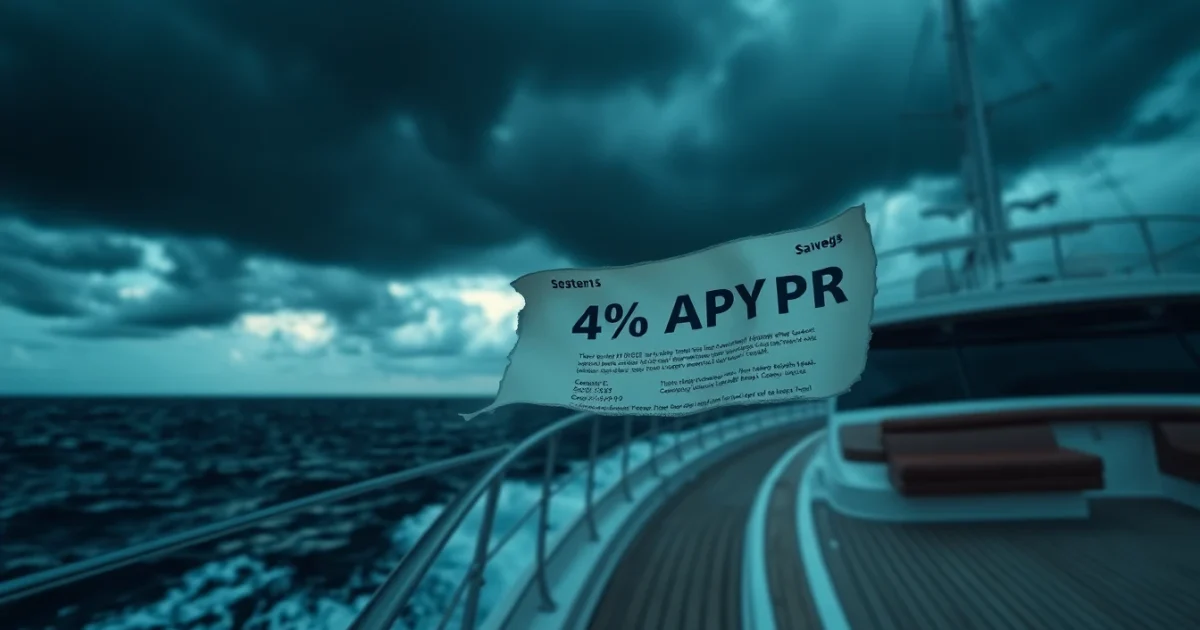
On April 7, 2026, the highest-yield savings accounts are offering around 4% APY. Marcus by Goldman Sachs, Ally Bank, and American Express Personal Savings are clustered in the 3.9% to 4.1% range. To a saver who has spent five years watching rates near zero, this looks like a gift.
It is not. It is a signal.
What 4% Actually Buys You
According to the Bureau of Labor Statistics data through early 2026, core inflation is tracking near 3.2% annually. If you deposit $100,000 into a 4% APY account, you earn $4,000 in year one. Your real purchasing power gain — the number that matters — is roughly 0.8%.
That means a dollar saved today buys you only slightly more goods next April than it does this month. The gap between the headline rate and inflation is the part nobody emphasizes in marketing materials.
Why Banks Are Paying This Much
High-yield savings rates follow the Fed funds rate. The current rate sits between 3.75% and 4.00%, where it has held since mid-2024. Banks price deposits at a spread above what they can borrow from the Fed. When that spread compresses — which happens when competition for deposits intensifies — banks have to pay depositors more to hold their cash.
The rate you see today reflects a banking system that is still competing fiercely for deposits after the 2023 regional bank stress. That competition will not last forever. Once deposit flows stabilize, rates will fall.
The Opportunity Cost Nobody Mentions
I ran this calculation across my trading models at AlgoVesta. A client asked whether to lock $250,000 into a 4% savings product for 18 months. I compared the guaranteed 4% APY against the historical return of a 60/40 portfolio (equities/bonds) over the same period. Since March 2025, the S&P 500 has returned 8.3% while a bond ladder yielded 4.6%. Even adjusting for volatility, the opportunity cost of pure savings is material if markets stay calm.
This is not advice to abandon savings or chase yield in stocks. It is pressure testing the assumption that 4% is a win. It is not. It is insurance against inflation erosion, priced as if it were an investment return.
What Changes the Game
Federal Reserve communications matter more than the raw rate. If the Fed begins cutting rates in the second half of 2026 — which futures markets price at roughly 65% probability — then the 4% you lock in today will look generous in 18 months, when competing offers drop to 2.5% or 3%.
That reversal is already visible in Certificate of Deposit (CD) markets. A 12-month CD at American Express currently yields 4.15%, but a 18-month CD yields only 4.05%. The curve is flat to inverted. Lenders expect lower rates ahead.
Your Move
If you have cash you will not need for 18 months, a 4% high-yield savings account or a 12-month CD at Marcus or Ally is defensible. Lock the rate before the Fed signals a cut, which could trigger a cascade of competitive rate reductions within weeks. Do not treat it as an investment return. Treat it as the price of keeping powder dry while inflation grinds at your purchasing power. That is the uncomfortable reality the ads do not show.
Related Reading

The information provided on SmartCapitalLog is for educational and informational purposes only and does not constitute financial, investment, or trading advice. Past performance is not indicative of future results. Always conduct your own research and consult with a qualified financial advisor before making any investment decisions. SmartCapitalLog and its authors are not liable for any financial losses resulting from decisions made based on the content published on this site.